 |
Català
| Castellano
| English
| Français
| Deutsch
| Italiano
| Galego
| Esperanto
En aquest lloc «web» trobareu propostes per fer front
a problemes econòmics que esdevenen en tots els estats del món:
manca d'informació sobre el mercat, suborns, corrupció,
misèria, carències pressupostàries, abús de
poder, etc.
|
 |
|
Banque Paribas' history. Extracted from «Handbook on the History of European Banks» written by European Association for Banking History E.V. Banque de Paris et des Pays-Bas was founded in Paris on 27 January 1872. Its status was that of a public limited company, and its capital amounted to 125 million francs, of which 62.5 million francs were raised in the first public issue. The bank came into being through a merger between the following two banks:
During its first year of existence, the new bank joined forces with Crédit Lyonnais to head the financial consortium set up to float one-third of the second great war-indemnity loan of 3 billion francs for the French government The major part of the funds raised by Banque de Paris et des Pays-Bas came through its European branches -more particularly its Brussels outlet- as a result of the close relations established with certain German financiers. In 1878, the bank's capital was reduced to 62.5 million francs (the volume of paid-in capital). It was then increased to 80 million francs in 1907, and to 100 million francs in 1912. By this time, the bank had become France's leading 'banque d'affaires' in terms of equity base and volume of business. Its most important role by far was that of financial intermediary. This generated 70 per cent of profits between 1909 and 1913, as the bank led or participated in government loan issues, and in share or bond issues for French and foreign private companies. Most noteworthy among these were:
At the same time, interests were being acquired in industrial concerns and public utilities: railways (Spain, Russia); tramways and electricity (Belgium, France, Egypt, Morocco, the Ottoman Empire); iron and steel (France, Russia); and chemical plants (Norway's Norvégienne de l'Azote). Meanwhile the bank was also building up a large portfolio of securities of its own, with a view to acquiring fruitful long-term interests in certain key sectors such as banking or those of industrial clients, in France and above all abroad.
Banking services, including discounting and overdraft facilities for companies, remained on a modest scale up to the end of the century, when they started to figure, though to a limited extent, in the bank's business. In correspondent banking, however, the bank was active, establishing links notably with Barings, with Deutsche Bank, with Wiener Bankverein in Austria, and Kuhn Loeb in the United States. During the First World War, Banque de Paris et des Pays-Bas helped to mobilize the nation's capital and savings for the war effort (through war loans and the 'Bons de la Défense Nationale'), and it played its part in negotiations to open credit accounts for the French Treasury in Spain, the Netherlands, Switzerland and Sweden. It also helped to raise finance for the weaponry industry (Compagnie Nationale de Matières Colorantes et de Produits Chimiques).
As placing capacity for foreign securities in the French and Belgian markets declined, so also did the volume of international financing transactions. The bank therefore increased its focus on the domestic and colonial markets and on the search for new areas of banking business, especially in services for companies with which it had existing links. On the international front, the bank handled reconstruction or stabilization loans floated partially in France for Austria, Poland, Romania (as lead bank for the 1928 and 1931 issues) and Czechoslovakia, as well as Belgian issues in France (1923, 1932, 1933). then French issues abroad (the Netherlands) during the second half the 1930s, and colonial loans. It was helping to stimulate investment in the colonial empires, at the same time, -more particularly that of France- through two holding companies: Compagnie Générale du Maroc and Compagnie Générale des Colonies, which provided finance for public utilities and a range of industrial concerns. Expanding its relations with industry,the bank was active in lending, in equity investments and in setting up of companies.
This period saw a reduction in the volume of foreign holdings in the portfolio, counterbalanced by an increase in interests in French and colonial concerns. Through Banque des Pays de l 'Europe Centrale, however, Banque de Paris et des Pays-Bas was still playing a substantial role in Austria, Czechoslovakia and Romania, also in Poland (through Banque Franco-Polonaise). Important positions were safeguarded in America and in the Middle East (an interest in Ottoman Bank was acquired in 1920). Inflation during the Second World War seriously eroded the increases in the bank's capital, which had been raised to 450 million francs in 1941, then to 675 million francs in 1943. It was a time of slack business. The bank was cut off from its affiliates and correspondent banking partners in the allied countries and it lost a portion of its foreign assets in Central Europe and Norway. Nevertheless it helped in the development of industrial patents for such products as alternative fuels, gasproducing substances and oil-shale. Since its merchant-banking profile had enabled it to sidestep nationalization in 1945, Banque de Paris et des Pays-Bas was able to take full advantage of the legislation of 2 December 1945 and 17 May 1946, which ratified the status of a full-service bank. The bank was thus poised to develop its activities freely in commercial banking for French companies and, before long, on an international scale. The first task was reconstruction and modernization in France, and by 1948 the bank was forming the OTH, a consultancy firm that was to be pivotal in the setting up by Paribas of France's second-largest property group. Next, the bank directed its energies towards the restructuring effort in the French industrial sectoraimed at ensuring that French companies were ready to face international competition in the newly emerging fields of information-systems (Bull) and electronics (the successive link-ups between Thomson, Brandt and CSF). The bank was equally active in metallurgy, iron and steel and mining (Nord-Est, Usinor), in mechanical and electrical engineering (Fives-Lille-Cail, Babcock, Neyrpic, Alsthom), in publishing (Hachette), and in tourism (CET, Club Méditerranée, Wagons Lits). Meanwhile it was continuing to play its predominant role in the energy sector (oil, nuclear engineering). By the 1950s, the bank was providing crucial back-up for French industrial companies wishing to export to the developing countries, and notably to Latin America. It pioneered new medium-term export-credit mechanisms that were to enable French manufacturers of capital equipment to win major deals. These were seen in the iron and steel industry in Latin America (Colombia, Peru, Brazil), in the electrical domain (Cabora Bassa in Mozambique), in petrochemicals (Neste Oy in Finland), then, in the much later 1970s and 1980s, in Venezuela with the Caracas metro, and in aircraft and aviation (Airbus); also in the Far East, Central Europe, the USSR and in the Middle East, notably in Iran where Paribas became a Bank of Teheran shareholder in 1958. In the industrial field, and under the guidance of Jean Reyre, managing director from 1948 to 1966 and then chairman up to 1969, the bank was also becoming a very potent force in a wide range of businesses: paper (La Rochette, Darblay); petroleum (Sogedip, Coparex, Total, Aquitaine); chemicals (Pierrefitte-Auby), pharmaceuticals (Labaz); public works (Fougerolle): shipbuilding (Chantiers de Bretagne); retail and distribution (Nouvelles Galeries, Prénatal. SCOA, FNAC): construction materials (Ciments Français) and agribusiness (Bonduelle, BSN). Meanwhile, Sema, formed in 1957 (and subsequently to become Metra International, in 1970), was now over its teething troubles and well on the way to the eminent position it now boasts in data-processing consultancy. During the 1970s and 1980s, the bank initiated projects involving communications (Compagnie Luxembourgeoise de Télédiffusion, Sofinergie, UGC), advanced technology and venture capital (Transgène, Partech). In 1968, the group made changes in its structure prompted by the Debré legislation of 1966. The former «Banque de Paris et des Pays-Bas» became Compagnie Financière (Paribas since 1982), and it was now a holding company with interests in the banking, financial, industrial and international spheres. In a move initiated by Jacques de Fouchier, the group's chairman since 1969, the link-up took place with the mortgage and consumer finance group Compagnie Bancaire (in which Paribas held a 45 per cent interest from 1978 onwards). At the start of the1990s, Paribas became the chief shareholder in Crédit du Nord which had meanwhile merged with Banque de l Union Parisienne. In parallel, the expansion of the bank's network beyond its existing outlets in Paris and Marseilles to the wider Paris region and other provincial cities commenced in 1967. Outside France, a Paribas investment bank was opened in New York at the start of the 1960s, followed by subsidiaries in London and Luxemburg in 1964. Under the guidance of Jacques de Fouchier. and subsequently Pierre Moussa, chairman of the group from 1978 to 1981. it went on to build up a worldwide network of banking subsidiaries and branches during the 1970s. First came the Middle East. France followed by the Far East, the United States and Canada. The European network, for its part, was continuing to thrive, particularly through the Brussels and Geneva operations, and its expansion went on until well into the 1980s, bringing new offices in Germany, Italy, Spain, Greece, the Scandinavian countries and Ireland. The bank had opened an office in Moscow in 1964. In Africa, Paribas had placed its focus on the exploiting of natural resources: Sahara oil during the 1950s (Finarep, Genarep, Coparex) and mining in West Africa (Taiba phosphates, Congo manganese-Comilog). Its principal holdings in Africa and overseas were grouped together within Cegepar and Cofimer. During the 1960s and 1970s and the decolonization process, Paribas was on the scene with its back-up, notably in Algeria and Morocco. Subsidiaries or branches were opened in Morocco, in west and central Africa, and in Egypt. Continuing in its very active role on the French financial markets, Paribas also became an increasingly prominent player in the worldwide Eurobond market during the second half of the 1960s. Its capital markets activities grew steadily, with a global approach, from 1980 onwards. Paribas became a top-ranking name, notably in bonds and swaps, and placed itself firmly in the lead for écu issues. The move initiated by Chairman Jean-Yves Haberer to open Bangue Paribas Capital Markets in London, with its offices in New York, Tokyo, Hong Kong, Frankfurt and Paris, did much to underpin the building up of such new business segments. The 1970s and 1980s also saw growth in Paribas' asset management services to private and institutional clients, traditionally focused on Geneva since the nineteenth century, but more recently bringing in Luxemburg, Paris, New York and Tokyo through the forming of Paribas Asset Management (PAM). Towards the close of the 1970s, Paribas became increasingly involved in oil trade financing. Operating chiefly out of Geneva, New York, London and Paris, it very soon won renown as the world's leader in this sector. At the same time, Paribas established closer relations during the 1960s and 1970s with the South African group AngloAmerican, then with Bank of America (Ameribas), Bayerische Vereinsbank and NatWest. During the 1970s, Paribas formed an alliance with S.G. Warburg, in which it owned a 25 per cent interest, and together they set up the Warburg Paribas Becker investment bank in the United States. This was taken over in 1984 by Merrill Lynch, in which Paribas acquired a shareholding at that point. Following the four years of nationalization (1982-86), during which Paribas had progressed under the chairmanship of Jean-Yves Haberer, its privatization came in 1987. The operation took place under the chairmanship of Michel François-Poncet and was highly successful. It brought in 3.8 million individual shareholders, alongside large French and foreign groups such as Axa, AGF, UAP, Comit, Parfinance (Frère in Belgium, Power in Canada), Sumitomo Life, and Kuweit Investment Authority. Some had already been Paribas shareholders before nationalization. In 1990, the Paribas Group initiated organizational changes, which were completed in 1991. The boards of directors of Compagnie Financière de Paribas and of Banque Paribas were replaced by supervisory boards, while their senior management bodies became management boards. The chairmen of the two companies' supervisory boards and management boards are respectively Michel François-Poncet and André Lévy-Lang. |
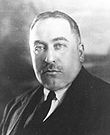 The
impact of inflation during the 1920s, combined with the reconstruction
effort and moves to expand the bank's activities under the guidance of
Horace Finaly (at the head of the bank from 1919 to 1937), led to successive
increases in the bank's capital base, which had reached 300 million francs
by 1929 (from 150 million francs in 1919 to 200 million in 1921).
The
impact of inflation during the 1920s, combined with the reconstruction
effort and moves to expand the bank's activities under the guidance of
Horace Finaly (at the head of the bank from 1919 to 1937), led to successive
increases in the bank's capital base, which had reached 300 million francs
by 1929 (from 150 million francs in 1919 to 200 million in 1921).